
A Love Story Set In A Riot
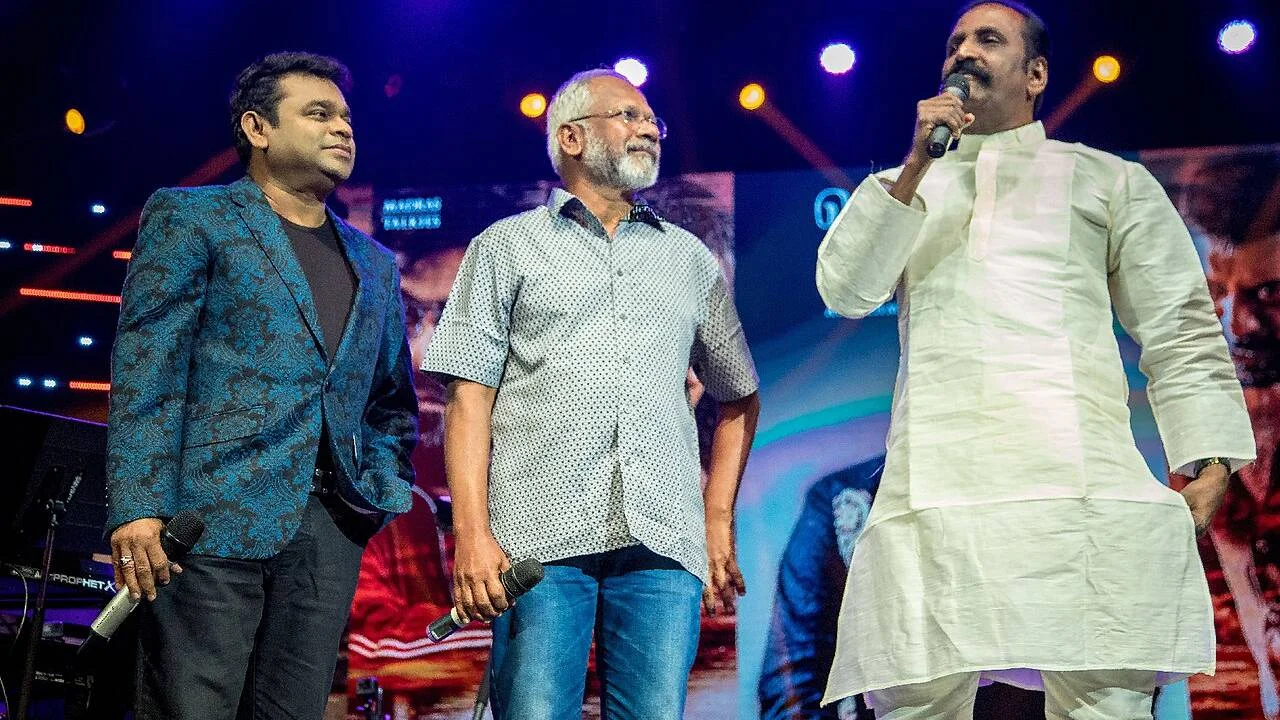
Bombay, directed by Mani Ratnam and starring Arvind Swamy and Manisha Koirala, tells of Shekhar, a Hindu man, and Shaila, a Muslim woman, who marry against family opposition and raise twin sons in Bombay. Their family life is torn by the riots that followed the demolition of the Babri Masjid on 6 December 1992 and by a second wave of violence in January 1993. The film was made in Tamil and dubbed into Hindi and Telugu. Its music by A. R. Rahman became hugely popular.
The film's aim, as Ratnam later described it, was to plead for tolerance. It showed ordinary people caught in violence they did not start. It also showed religious leaders and politicians who fanned division. That even handed intent did not protect it. Critics from different sides each found something to object to. Some said it blamed Muslims for starting the riots. Others said it equated a Muslim leader with a Hindu party leader in a false balance. Still others said it ignored the role of the Shiv Sena and the police.
Those criticisms were opinions about a fictional film, not court findings. They matter because they shaped the release. A film that offends both sides can still be a plea for peace, but it can also become a target for both sides. Bombay became that kind of film. Its release was watched not only by audiences, but by police, politicians and community leaders.
Censor Delays And The Election Timing
Bombay was first planned for January 1995, during Pongal. It did not release then. Ratnam later told his biographer that the film ran into the Maharashtra elections and into two attitudes at the censor board. One attitude, he said, wanted to block it. The other was more reasonable. Until the elections were over, the film did not get cleared. The legislative assembly elections in February and March 1995 brought a Shiv Sena and BJP combine to power in Maharashtra for the first time.
The censor cuts were, in the end, relatively light, about a minute and a half of footage, according to Ratnam's account. The Babri demolition was shown through newspaper headlines and photographs, not through direct footage of destruction, because the board did not want that shown. A scene showing a policeman shooting was also a concern. Ratnam said a police commissioner had promised him the film would never see the light of day, while other officials were sensible and helped it clear a week after the elections.
Release, Protests And An Attack On Ratnam
Bombay released on 10 March 1995. It was a critical and commercial success in India, and it played at international festivals. But its release was accompanied by protests and by police presence at theatres in some places. Muslim leaders in Mumbai demanded a ban, according to Film Companion's retrospective, but did not get one. Shiv Sena concerns led to cuts. The film was, in the words of that retrospective, an equal opportunity offender.
After release, two homemade bombs were thrown at Ratnam's house, according to film histories. Ratnam was hospitalised with shrapnel injuries. The attackers were described in those accounts as radical Islamist terrorists. No detailed trial outcome is given in the sources used here, so this article does not name any person as convicted for that attack. The attack itself is a documented part of the film's history and it shows the personal risk Ratnam faced for making Bombay.
The film was also banned in Singapore and Malaysia on release. Those bans were foreign government decisions, not Indian court orders. They show that the film's subject, inter religious marriage during riots, was sensitive beyond India too. In India, the film stayed in release despite protests. That contrast is important. A ban abroad did not lead to a ban at home, even though the home release was tense.
Why Bombay Still Sparks Argument
Bombay is still debated in film writing. Supporters praise its human story, its music and its refusal to take a simple side. Critics argue that its plea for harmony came at the cost of historical accuracy, especially on who did what during the riots. Some critics say the film softened the role of the Shiv Sena and the police. Others say it softened the role of Muslim leaders. Those are critical judgments, not facts that a court settled.
The film's legacy for Indian cinema is clear in one respect. It showed that a mainstream film could take a recent riot as its backdrop and still reach a mass audience. It also showed the cost. A director could face censor delay, political pressure, theatre protests and a physical attack. Later film makers who tackle riots often cite Bombay as both an inspiration and a warning.
For viewers today, Bombay works best when watched as fiction with a point of view, not as a history textbook. It compresses events, invents a family and uses that family to argue for tolerance. Its power lies in that family story. Its limits lie in what any single family story must leave out about a complex riot. Keeping those two points together helps explain why the film is loved and argued over at the same time.
The closing note flags what is unconfirmed. The claim that Thackeray personally cleared the film is a reported account, not a formal record in the sources used here. The identity and conviction of the bomb attackers are not established in those sources, so no person is named as guilty here. The censor cuts of about 90 seconds are Ratnam's own account, reported in interviews, not a CBFC press release quoted here. What is established is the release date, the bans abroad, the protests and the attack on Ratnam's home as reported in film histories.
Sources and reporting
- Film Companion — Accessed 2026-11-04 · Verifies the 1995 controversy, Thackeray cuts demand and Muslim leaders' ban demand.
- Scroll — 2020 · Verifies the election timing, the light cuts and Ratnam's account of censor pressure.
- India Today — 15 April 1995 · Verifies critical acclaim alongside protests on release.