

You open TikTok because you have seven minutes to kill.
Forty-two minutes later, you know:
what a stranger ate in Copenhagen,
why someone you’ve never met broke up with their boyfriend,
which celebrity apparently wore the wrong shoes,
four signs you’re secretly emotionally unavailable,
and what a woman in Ohio bought at Costco.
You have consumed an impressive amount of human activity.
You have interacted with almost nobody.
So you close the app.
And for a second, something feels strangely obvious:
Maybe you don’t need another video about people having lives.
Maybe you need to go have one.
That impulse now has an extremely 2026 name:
community-maxxing.
The term began receiving wider cultural attention in August 2026 as outlets including The Guardian and VICE described young people deliberately seeking more regular face-to-face connection through book clubs, run clubs, hiking groups, crafting circles, neighborhood relationships, volunteering and other shared activities.
It sounds like another internet joke.
And technically, part of it is.
But underneath the ridiculous suffix sits a serious question:
After years of optimizing our digital lives, are people starting to optimize for something considerably older?
Knowing other humans.
Table of Contents
What Is Community-Maxxing?
Community-maxxing means intentionally increasing the amount and quality of real-world social connection in your life.
That might involve:
joining a recurring run club,
going to a weekly book group,
volunteering,
attending community events,
taking an in-person class,
playing recreational sports,
joining a crafting circle,
visiting the same neighborhood café regularly,
talking to neighbors,
organizing dinners,
or simply becoming someone who actually shows up.
The important part is not any particular hobby.
It is repeated participation around other people.
VICE’s August 2026 coverage described the trend as connecting through shared interests and passions, including book clubs, hiking, knitting and other group activities. The Guardian similarly framed it as a response to digital isolation and doomscrolling, but also as something broader than just socializing: becoming more connected to the people and places immediately around you.
In other words:
Community-maxxing is not:
“Attend one pottery class and achieve friendship.”
It is closer to:
“Build enough repeated contact into your life that relationships have somewhere to grow.”
Why Is Everything “Maxxing” Now?
If the name sounds absurd, that is partly the point.
The suffix “-maxxing” originally became prominent through online self-optimization language, particularly terms such as looksmaxxing. But by 2026, it had expanded far beyond appearance.
Meltwater analyzed online conversation between January 1 and May 25, 2026 and found that usage of “maxxing” terms increased 96%, while engagement with that content rose 208%.
More importantly, only about 36% of the sampled “maxxing” posts were appearance-related. The majority concerned other subjects—hobbies, humor, lifestyle, wellness and ordinary activities.
We have apparently reached the point where humans cannot simply:
read.
We must reading-maxx.
We cannot eat fiber.
We must fiber-maxx.
We cannot have friends.
We must community-maxx.
The language may be silly.
The underlying desire isn’t.
Is Gen Z Really “Done With Doomscrolling”?
Not exactly.
This is where a catchy cultural headline needs some reality.
There is currently no national U.S. study showing that Gen Z collectively deleted social media in August 2026 and marched into book clubs.
Community-maxxing is an emerging cultural trend and vocabulary term.
It is not a scientifically measured mass migration away from screens.
And younger people still get real value from digital connection.
Pew Research Center’s 2025 survey of U.S. teens found that 74% said social media made them feel more connected to their friends.
At the same time, 45% said they spent too much time on social media, up from 36% in 2022. About 48% believed social media had a mostly negative effect on people their age, even though only 14% said it negatively affected them personally.
That contradiction matters.
You can enjoy the internet and still want less of it.
You can love your group chat and still want to see your group.
You can send somebody 42 Reels and still miss sitting next to them.
Community-maxxing makes more sense as:
“digital connection isn’t enough by itself”
than:
“the internet is bad and everyone is quitting.”
Americans Really Are Socializing Less
The broader context makes the trend easier to understand.
The U.S. Bureau of Labor Statistics’ latest American Time Use Survey found that people were less likely to engage in socializing and communicating on an average day in 2025 than in 2015: 30% versus 38%.
Average time devoted to socializing and communicating also declined, from 41 minutes per day to 35 minutes.
Meanwhile, average leisure time spent playing games or using a computer increased from 25 minutes in 2015 to 37 minutes in 2025.
That does not prove:
phones caused Americans to stop socializing.
Time-use changes can reflect:
work,
family structures,
remote employment,
pandemic disruption,
housing,
transportation,
technology,
economic pressures,
changing entertainment,
and many other factors.
But the basic pattern is real.
People are spending less time socializing than they did a decade earlier.
That makes “go outside and join something” feel surprisingly timely.
Loneliness Is Not Just “Being Alone”
Another reason community-maxxing resonates is that loneliness is not simply the absence of bodies.
CDC defines loneliness around feeling disconnected or lacking the meaningful closeness someone wants.
You can have:
500 followers,
18 unread messages,
six group chats,
and a Slack workspace
and still feel lonely.
CDC says roughly one in three U.S. adults report feeling lonely, and it specifically lists young adults among groups who may be particularly affected.
That helps explain why more digital communication does not automatically solve disconnection.
Quantity of contact and quality of connection are different things.
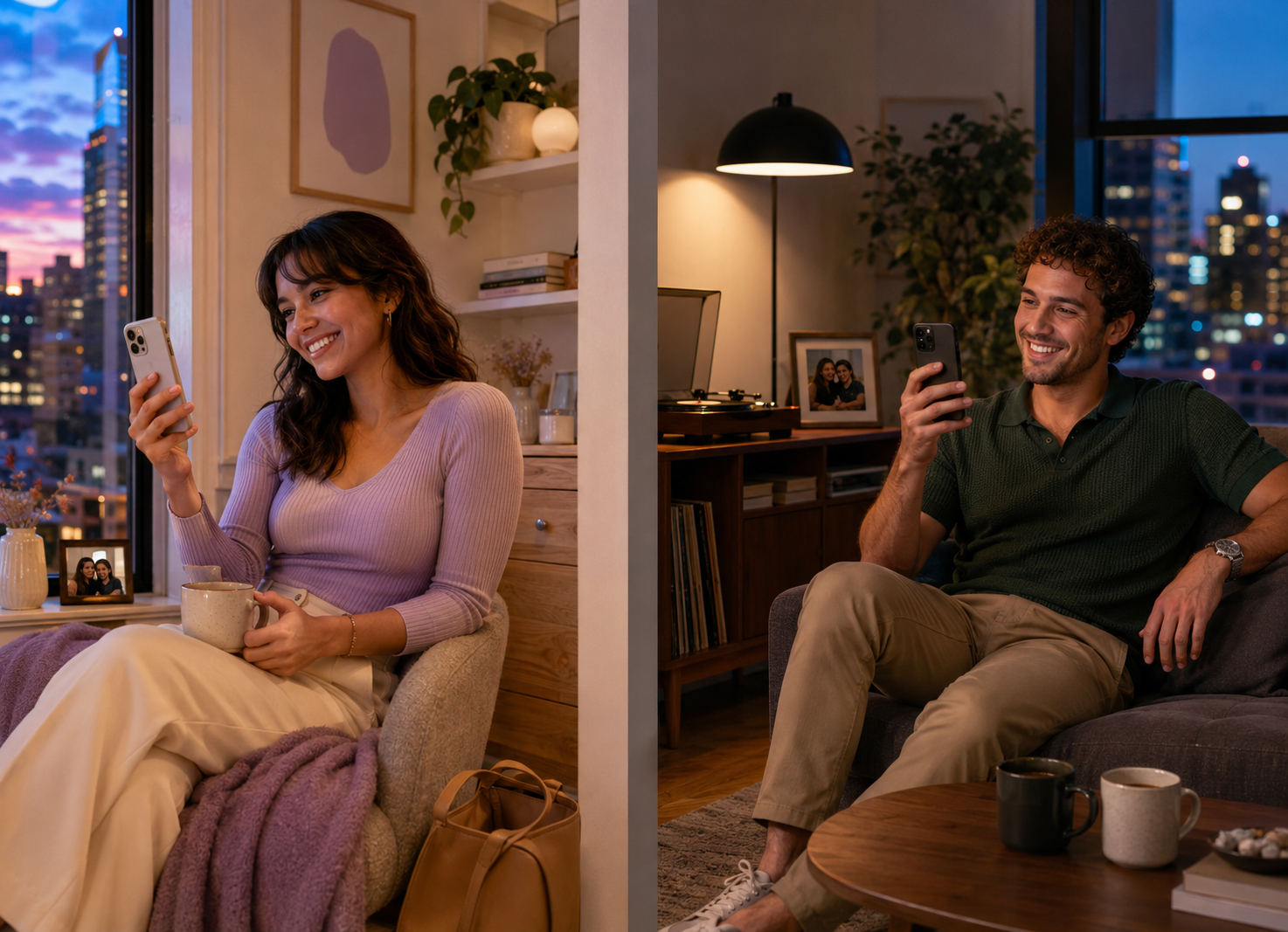
The phone can give you endless human content.
It cannot guarantee belonging.
Community-Maxxing Is Really About Repetition
People sometimes approach friendship as though they are dating strangers on an app.
Meet someone once.
Instant chemistry?
No?
Next.
But many real communities do not form through immediate intensity.
They form through repeated exposure.
You see the same person Tuesday.
Then next Tuesday.
Eventually:
“Hey, weren’t you here last week?”
Three weeks later:
“You getting coffee after?”
Two months later:
“Want to come to this thing Saturday?”
Nothing viral happens.
Nobody records a transformation montage.
You just slowly stop being strangers.
This is why community-maxxing overlaps strongly with what researchers call third places—social spaces outside the home and workplace where repeated casual interaction can occur.
Researchers using ten years of American Time Use Survey data found that third places represent an important source of daily social connection after home and work.
A third place can be:
a café,
library,
gym,
park,
community center,
church,
sports club,
barbershop,
bookstore,
local restaurant,
or anywhere else where people regularly encounter one another.
Community is difficult to build if you never encounter the same person twice.
This Is Why Run Clubs Suddenly Feel Like Dating Apps
One amusing side effect of the real-life social revival is that activities designed around hobbies increasingly double as friendship—and sometimes dating—spaces.
You join because you want to run.
Then you meet:
friends,
friends of friends,
coworkers of friends,
someone’s roommate,
someone attractive,
someone who introduces you to someone attractive.
Offline social networks have always worked like this.
Digital life simply made us temporarily forget how powerful they can be.
Jiggle X Wiggle’s guide to meeting someone without dating apps makes the same point from the romance side: offline relationships require opportunity, and one of the most reliable ways to create opportunity is to build a life where you repeatedly encounter other people.
The goal is not:
“Join a running club to hunt for a boyfriend.”
It is:
“Build a socially alive life.”
Romance may be one side effect.
Community-Maxxing and SABSing Are Basically Cousins
Another 2026 trend, SABSing, operates on remarkably similar logic.
SABSing—“seeing and being seen”—encourages singles to spend more time in environments where spontaneous offline interactions can actually happen.
As Jiggle X Wiggle’s guide to SABSing and meeting people IRL again explains, there is no evidence SABSing guarantees romantic success.
Its usefulness is simpler.
If you spend your entire weekend:
at home,
headphones on,
phone in hand,
food delivered,
entertainment streamed,
socializing digitally,
you have built an extremely convenient life.
You have also created very few accidental human encounters.
Community-maxxing adds those encounters back deliberately.
Why Real-Life Connection Can Feel Different
Digital communication is real communication.
Your online friend is not imaginary because they live 1,200 miles away.
A supportive Discord community can matter.
A group chat can make an awful day easier.
A video call can sustain a friendship across continents.
So this is not a competition where:
offline = authentic
and
online = fake.
But the formats offer different things.
Being physically together includes:
shared environments,
body language,
eye contact,
touch when appropriate,
small spontaneous conversations,
shared routines,
silence,
and interactions that are not deliberately opened and closed like messages.
You might enter a café intending to talk to one person and unexpectedly encounter three others.
Digital spaces are often excellent at maintaining chosen connections.
Physical communities can be particularly good at creating unplanned ones.
What Does Research Say About Social Connection?
The strongest answer is:
Connection matters, but scientists are much more cautious than lifestyle trends.
CDC describes social connection as an important part of mental and physical health and links stronger social bonds with better health, stress management and overall well-being.
A 2025 systematic review and meta-analysis looked specifically at interventions intended to increase social connection among young adults ages 18–24.
Only six eligible studies were identified, which tells you immediately that the evidence base is smaller than social media advice might suggest.
Overall, the interventions were associated with a small reduction in depressive symptoms and produced some beneficial social-connection outcomes.
But pooled results did not show a statistically significant overall reduction in loneliness.
Researchers concluded that social-connection interventions show promise, while emphasizing the need for larger, higher-quality studies across more diverse settings.
That’s a useful reality check.
Joining a book club is not clinically proven to cure loneliness.
It may give loneliness fewer places to hide.
Those are different claims.
Sometimes You Need a Group, Not Another Self-Help Project
There is something especially interesting in that systematic review.
Four of the six studies involved group-based interventions.
Researchers noted that the one self-directed app intervention had low engagement, and suggested group-based approaches may matter because they do not place the entire burden of becoming connected on the isolated individual.
That idea fits community-maxxing unusually well.
Imagine you’re lonely.
The internet tells you:
improve your mindset,
fix your attachment style,
journal,
optimize your routine,
wake up at 5 a.m.,
become more confident,
heal yourself,
love solitude.
Some of that can help.
But eventually loneliness contains a logistical problem.
You need people.
Sometimes the answer is not one more internal transformation.
It is:
Tuesday night volleyball.
Why “Grandma Hobbies” Fit the Trend So Well
Book clubs.
Knitting.
Pottery.
Gardening.
Cooking classes.
Walking groups.
These activities sound almost aggressively ordinary.
That may be part of their appeal.
Social media environments constantly generate novelty.
New clip.
New outrage.
New trend.
New person.
New controversy.
A recurring hobby does the opposite.
Same room.
Same hour.
Many of the same people.
That predictability is precisely what gives relationships time to develop.
You don’t need the hobby itself to transform your life.
The hobby gives you somewhere to keep showing up.
Your Friends Can Affect Your Love Life More Than You Think
Building community can also change dating indirectly.
More friendships mean:
more invitations,
more introductions,
more social feedback,
more people who know you well,
and more opportunities to meet people through networks instead of profiles.
That is closely connected to what Jiggle X Wiggle calls friendfluence in dating—the way friends shape who we meet, how we evaluate partners and how relationships develop.
A socially connected life does not guarantee romance.
But it gives romance more pathways.
You stop asking:
“Where do I find a partner?”
and start building a life containing more people generally.
Sometimes that works much better.
The Phone Is Not the Enemy
Community-maxxing becomes less useful when it turns into:
PHONE BAD.
Phones can create communities.
The run club may have started through Instagram.
The book group may organize on WhatsApp.
You may discover a local volunteering event through TikTok.
You may join a Discord server and eventually attend its real-life meetup.
Technology can be the bridge.
The issue is what happens when the bridge becomes the destination.
Pew’s findings illustrate this perfectly: U.S. teens report meaningful social benefits from social media while also increasingly saying they spend too much time there.
Both things can be true.
Doomscrolling and Connection Use the Same Device
Your phone can:
help you find a hiking group,
then prevent you from talking to anybody during the hike.
It can:
organize dinner,
then sit between everyone at the table.
It can:
connect you with friends,
then absorb your attention while those friends are physically beside you.
That is why Jiggle X Wiggle’s article on phubbing and phone distraction in relationships matters beyond couples.
Repeatedly choosing a screen over whoever is physically present can undermine the very connection you went out to find.
Community-maxxing does not require leaving the phone at home.
Sometimes it just means leaving it in your pocket long enough for something unscheduled to happen.
How to Actually Start Community-Maxxing
You do not need twelve new hobbies.
That would just turn friendship into another productivity system.
Start smaller.
Pick One Recurring Place
Recurrence matters more than novelty.
Choose something weekly or biweekly:
a class,
sports group,
library event,
volunteer shift,
faith community,
club,
local café,
or neighborhood activity.
A recurring location gives familiarity time to develop.
Choose Something You Would Enjoy Even If Nobody Became Your Best Friend
If you hate running, don’t join a run club because TikTok said everyone attractive is there.
You will simply become lonely and out of breath.
Choose an activity you genuinely like.
That gives you a reason to return before the friendships exist.
Become a Regular
This may be the least glamorous social advice ever:
Go back.
Community usually requires recognition before intimacy.
First:
“I’ve seen you before.”
Then:
“What’s your name again?”
Eventually:
“Are you coming next week?”
Initiate Tiny Interactions
You do not need to become the loudest person in the room.
Try:
“How long have you been coming here?”
“Have you done this class before?”
“Is that book actually good?”
“What route are we running?”
Friendship does not begin with:
“Would you like to become an important source of emotional support?”
It usually begins with something boring.
Turn Activity Friends Into Actual Friends
This is where many adult friendships stall.
You see someone weekly.
You like them.
They like you.
Neither person does anything.
Eventually one of you has to say:
“A few of us are grabbing food afterward. Want to come?”
Or:
“Want to get coffee sometime?”
That small move takes a relationship outside its original container.
Contribute Instead of Only Consuming
Community becomes more meaningful when you participate.
Offer help.
Bring something.
Organize an outing.
Remember someone’s name.
Introduce people.
Volunteer.
Ask how somebody’s interview went.
Belonging is not merely finding the perfect group that accepts you.
It also involves becoming useful to the group.
Community-Maxxing Is Not Networking
This distinction matters.
Networking asks:
“Who could be useful to me?”
Community asks:
“Who are my people?”
Sometimes those worlds overlap.
A friend may become a professional connection.
Someone from your sports league may know about a job.
Fine.
But if every interaction becomes:
What can I gain?
How influential are they?
Can they help my career?
you have recreated LinkedIn in physical form.
Congratulations.
That is not what most people mean by community.
Community includes relationships with no obvious optimization value.
Perhaps that is why the idea feels refreshing in the first place.
Don’t Turn Friendship Into Another Score
There is one obvious danger hidden inside the term community-maxxing.
“Maxxing” implies optimization.
More friends.
More events.
More invitations.
More contacts.
More community.
Eventually:
“I attended four social events this week and increased friendship output 23%.”
Please stop.
The goal is not the maximum possible number of human beings.
CDC’s definition of social connection includes the quality, functions and diversity of relationships—not just network size.
Five relationships that feel genuine may matter more than 500 contacts.
Community-maxxing works best when the “maxxing” part remains a joke.
What If You’re Introverted?
Then do not build an extrovert’s life.
Community is not:
talking continuously,
attending huge parties,
meeting 60 people,
or becoming socially available every evening.
An introvert might community-maxx through:
one recurring book club,
two close friends,
a monthly volunteer shift,
a quiet café where staff recognize them,
and regular Sunday dinner with family.
The relevant question is not:
“How social do I look?”
It is:
“Do I have the amount and type of connection I actually want?”
Loneliness is partly about the gap between desired and actual connection.
That desired amount varies.
What If You Feel Awkward Going Alone?
Most community-maxxing advice skips the worst part:
walking in.
You arrive alone.
Everyone else seems to know each other.
You suddenly become intensely interested in checking your phone.
This is normal.
The first visit often feels like entering somebody else’s community.
The second feels slightly less strange.
After enough returns, something shifts.
You stop being:
“new person.”
You become:
“person who comes on Tuesdays.”
That sounds insignificant.
It is how belonging starts.
Community Spaces Aren’t Equally Accessible
There is another limitation worth taking seriously.
“Just join a community” assumes community is available.
Access can depend on:
transportation,
disability,
work schedules,
childcare,
money,
neighborhood safety,
geography,
culture,
and whether someone feels welcomed in the available spaces.
CDC specifically notes that parks, libraries, transportation and community programs can shape people’s opportunities for social connection.
U.S. research on third places has also found geographic and demographic inequalities in access to those community spaces.
So community-maxxing cannot simply become:
“Lonely? Try harder.”
Sometimes people need better social infrastructure, not better personality advice.
The Dating Recession Makes Community More Important
This trend also arrives during a period when many young Americans appear less active in dating.
As Jiggle X Wiggle’s analysis of why men and women are dating less explains, many young adults still want partnership but may feel worn down by dating apps, costs, rejection, safety concerns and ambiguity.
Community provides something dating apps struggle to reproduce:
context.
You see how someone treats:
friends,
servers,
teammates,
older people,
strangers,
and themselves.
You develop familiarity before deciding whether there is romance.
Even if no romance appears, you may gain something dating culture sometimes treats as secondary:
friends.
That’s not a consolation prize.
Is Community-Maxxing Actually a Good Trend?
Mostly, yes—if we keep our claims realistic.
There is no evidence that a hashtag called community-maxxing has solved Gen Z loneliness.
There is no randomized trial proving:
book club + pottery + neighbor conversation = happiness.
And there is no reason to treat online friendships as inferior.
But the trend points toward several ideas that are supported much more strongly than the trend itself:
Humans benefit from meaningful social connection.
Loneliness and isolation matter for health.
Americans are spending less time socializing than a decade ago.
Young people frequently report complicated relationships with social media.
Repeated shared environments can create opportunities for connection.
And sometimes the most practical way to make friends is embarrassingly simple:
Go somewhere.
Go again.
Talk to someone.
Remember them.
Show up next week.
Maybe We Didn’t Need a New Word
Community-maxxing is funny because it packages an extremely old human behavior as though it were a newly discovered performance hack.
BREAKING:
Local twenty-three-year-old discovers neighbors.
Woman attends knitting circle.
Man joins recreational soccer league.
Friends eat dinner without livestreaming it.
Civilization stunned.
But maybe the ridiculous name is useful.
The internet took the language of relentless optimization and accidentally pointed it toward something that cannot be completely optimized.
Real relationships are inefficient.
They involve:
travel,
waiting,
awkwardness,
silence,
cancelled plans,
helping somebody move,
listening to stories you’ve heard before,
and occasionally spending two hours somewhere you would never have chosen because your friend wanted you there.
Doomscrolling is effortless.
Community requires participation.
And maybe that is precisely why it can feel more satisfying.
You do not need to leave the internet.
You do not need twenty new friends.
You probably don’t need to “maximize” anything.
You may just need one more place in your week where people expect to see you.
That is community-maxxing without the hashtag.
Frequently Asked Questions
What does community-maxxing mean?
Community-maxxing is an emerging 2026 term for intentionally building more real-world social connection through recurring activities, clubs, hobbies, volunteering, neighborhood relationships and other forms of face-to-face participation.
Is community-maxxing a real Gen Z trend?
It is a real emerging cultural term receiving media attention in 2026, but there is not yet national research measuring how many Gen Z Americans identify as community-maxxers. The broader desire for more offline connection is supported by trends around socializing, loneliness, third places and dissatisfaction with excessive screen time.
Does social media make Gen Z lonely?
That conclusion is too simple. Pew found that 74% of surveyed U.S. teens said social media helped them feel connected to friends, while 45% also said they spent too much time on it. Digital platforms can support connection and create difficulties simultaneously.
Can joining clubs actually reduce loneliness?
Possibly, but the research is still developing. A systematic review of social-connection interventions among young adults found beneficial social outcomes and a small reduction in depressive symptoms overall, but no statistically significant pooled reduction in loneliness.
What are examples of community-maxxing?
Examples include recurring book clubs, run clubs, recreational sports, volunteer groups, crafting circles, community gardens, religious communities, neighborhood events, classes, local cafés and other places where people repeatedly meet around shared activities.
How do I community-maxx if I’m introverted?
Focus on smaller recurring settings rather than large social events. One book group, class, volunteer activity or neighborhood routine can create meaningful repeated contact without requiring constant socializing.
Research & Sources
The Guardian — Community-maxxing: Gen Z are done with doomscrolling and ready to socialise
Current August 2026 reporting documenting the emerging term and examples including book clubs, crafting groups, hiking, running and neighborhood connection.
The Guardian community-maxxing coverage
VICE — Gen Z Is Done Doomscrolling, Now They’re Community-Maxxing
Current cultural reporting defining the trend around shared passions, recurring groups and real-life interaction.
VICE community-maxxing coverage
U.S. Bureau of Labor Statistics — American Time Use Survey, 2025 Results
Official U.S. data showing declines in the share of people socializing and average time spent socializing compared with 2015.
BLS American Time Use Survey 2025
CDC — Community & Connection / Social Connection
Current U.S. public-health guidance and data on loneliness, social support and the importance of social connection for well-being.
CDC Community & Connection
Pew Research Center — Teens, Social Media and Mental Health
National U.S. survey showing the mixed nature of social media: many teens report connection benefits while growing shares also report excessive use or negative effects.
Pew teens and social media research
Vazquez Alvarez et al. — Social Connection Interventions and Depression in Young Adults
Systematic review and meta-analysis published in Social Psychiatry and Psychiatric Epidemiology, finding promising but still limited evidence for interventions targeting young-adult social connection.
Read the Springer systematic review
Meltwater — Why 2026 Is the Year of “Maxxing”
Cross-platform analysis showing how “maxxing” vocabulary expanded beyond appearance into mainstream lifestyle and humorous internet culture during 2026.
Meltwater maxxing trend analysis








Leave a Reply