


Imagine you’re single and interested in meeting someone.
You could spend Friday evening on your couch.
Open a dating app.
Swipe.
Swipe.
Swipe.
Match with someone.
Send a message.
Wait.
Get a reply.
Exchange seven messages.
Then they disappear.
Excellent.
Another successful evening in modern romance.
Or…
You could leave the house.
Go somewhere people your age actually spend time.
Put your phone away.
Look around.
Make eye contact.
Smile at someone.
Maybe say hello.
Revolutionary stuff, apparently.
Because one of the dating trends getting attention in 2026 has essentially rediscovered something humans were doing long before dating apps existed:
being somewhere other people can actually see you.
It’s called SABSing dating.
And underneath the slightly strange name is a surprisingly simple idea.
What Is SABSing Dating?
SABSing dating is an offline dating approach built around “seeing and being seen.”
SABS stands for:
See And Be Seen.
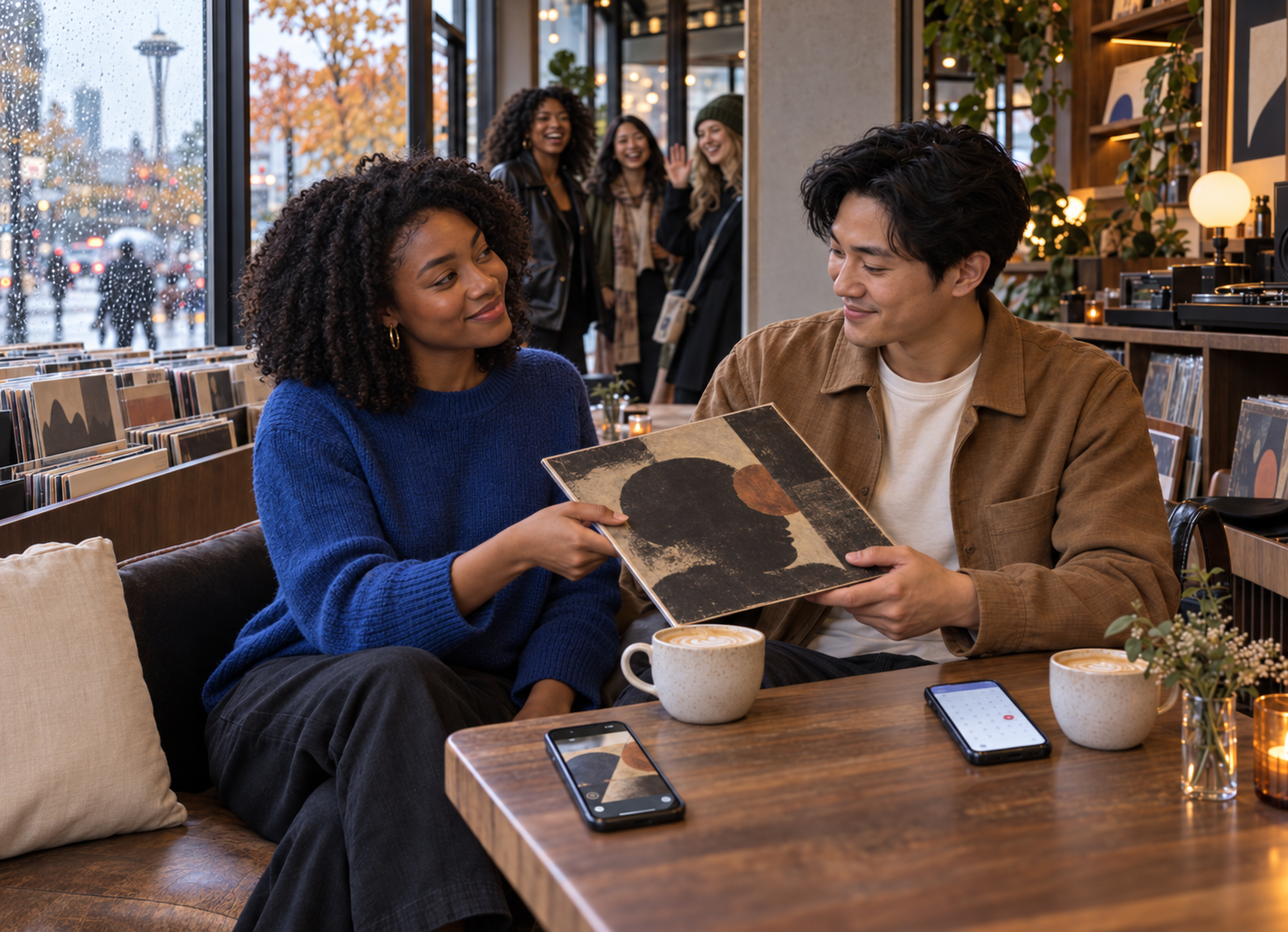
Instead of spending all your dating energy swiping through profiles, SABSing encourages you to put yourself in real social environments, appear approachable and create opportunities for spontaneous interactions.
Maybe you sit on a busy campus lawn instead of rushing back to your room.
Maybe you study somewhere social instead of hiding in the quietest corner of the library.
Maybe you go to a local event.
Maybe you linger after class.
Maybe you walk through an area where people naturally gather.
Maybe you take the headphones off.
Maybe you look up from your phone.
And maybe—this is the terrifying part—you make eye contact with another human being.
That’s basically SABSing.
VICE described the trend in August 2026 as an “anti-dating-app” approach spreading across college campuses.
Psychology Today has also discussed SABSing as part of a broader movement toward more spontaneous and authentic in-person connection.
But SABSing isn’t really anti-technology.
It’s more like:
“Maybe my future partner shouldn’t exist exclusively inside a rectangle in my hand.”
Where Did SABSing Come From?
The term has been associated with the University of Pennsylvania.
Natalia Castillo, who wrote about SABS while serving as editor-in-chief of the university’s student magazine 34th Street, described the campus ritual of intentionally placing yourself where you might encounter people you want to see.
The funny part is that the behavior itself is ancient.
Your grandparents SABSed.
They just didn’t call it SABSing.
They called it:
going outside.
Before dating apps, people had fewer ways to manufacture introductions.
You met through:
school,
work,
friends,
parties,
religious communities,
clubs,
neighborhoods,
sports,
cafés,
events,
and random social encounters.
You had to exist in places where other people existed.
SABSing gives that old behavior a very 2026 name.
What Does SABSing Actually Look Like?
Let’s say you’re in college.
There’s someone you’ve noticed around campus.
You could spend the next month trying to find their Instagram.
Or you could notice that they regularly sit outside the student center around lunchtime.
So instead of eating alone while scrolling TikTok, you sit somewhere nearby with your friends.
Not directly beside them.
Please don’t turn SABSing into surveillance.
You simply put yourself in the same social environment.
Maybe your eyes meet.
Maybe you smile.
Maybe next time they say:
“Hey, aren’t you in Professor Miller’s class?”
And suddenly you have something dating apps struggle to manufacture:
a naturally occurring interaction.
No match notification.
No optimized opening line.
No profile evaluation.
Just two people noticing each other.
SABSing Is Not Stalking Your Crush
We should establish this immediately.
SABSing does not mean learning someone’s entire schedule and repeatedly appearing everywhere they go.
If you know:
their Tuesday chemistry lecture,
Wednesday gym schedule,
Thursday lunch order,
Friday parking space,
and Saturday grocery-store route…
you are no longer “seeing and being seen.”
You are conducting field research.
The point is to make yourself socially available, not to engineer unwanted contact with one specific person.
Healthy SABSing leaves room for chance.
It also respects whether the other person actually wants to interact.
Why Is SABSing Dating Trending Now?
Because modern dating has created a weird contradiction.
We have more technological tools for meeting people than almost any generation before us.
Yet many young adults say dating feels difficult.
YPulse reported in September 2026 that 70% of 18–24-year-olds agree that dating is harder now than it was in the past.
Dating apps themselves appear to recognize the frustration.
Platforms have been experimenting with:
more intentional matching,
AI-assisted features,
local meetups,
and IRL events.
Tinder has expanded event-based experiences.
Bumble has talked about moving away from optimizing primarily for rapid swiping toward fewer, more considered signals.
Something is changing.
People haven’t stopped wanting connection.
They’re questioning whether endless swiping is always the best way to find it.
Swipe Fatigue Is Real Enough That Dating Apps Are Changing
Think about what swiping does psychologically.
You’re looking at people one after another.
Photo.
Bio.
Decision.
Next.
Photo.
Bio.
Decision.
Next.
Eventually people can start feeling less like humans and more like options in a catalog.
Too short.
Next.
Bad prompt.
Next.
Weird sunglasses.
Next.
Says “fluent in sarcasm.”
Absolutely not.
Next.
For some singles, that exhaustion eventually becomes full-on dating burnout, where swiping and starting over with new people stops feeling exciting at all.
The problem isn’t necessarily dating apps themselves.
Millions of people have formed meaningful relationships through them.
The problem is what can happen when dating becomes an endless evaluation process.
There’s always another profile.
Another match.
Another possibility.
Another person one swipe away.
SABSing introduces friction back into dating.
And strangely, that may be part of its appeal.
Meeting Someone IRL Gives You Information a Profile Can’t
A dating profile is controlled.
You choose:
your best photos,
your funniest prompt,
your most flattering angle,
your interesting hobbies,
and the version of yourself you’d like strangers to meet first.
Real life is messier.
And more informative.
When you meet someone naturally, you immediately notice things a profile struggles to communicate.
How do they carry themselves?
Do they smile?
Are they warm?
How do they speak to other people?
Are they funny without trying?
Do you feel comfortable around them?
Does conversation flow?
Do they have that completely irrational thing we call:
chemistry?
Someone can be mediocre on an app and magnetic in person.
Someone else can have an incredible profile and somehow make five minutes feel like a tax audit.
Humans are difficult to compress into six photographs.
SABSing Brings Back Serendipity
One of the nicest things about meeting someone organically is that you weren’t necessarily looking for them.
You’re getting coffee.
Going to class.
Walking through a park.
Browsing a bookstore.
Attending an event.
And suddenly:
Oh.
Who’s that?
There is something emotionally different about discovering someone unexpectedly.
Dating apps begin with romantic intent.
You are there because you’re looking for someone.
SABSing allows attraction to appear inside ordinary life.
That’s part of the appeal.
Psychology Today has described the trend as a way of bringing more serendipity back into people’s social lives.
And serendipity has been missing from a lot of modern dating.
The Phone Might Be Your Biggest SABSing Enemy
Picture two people.
Both single.
Both attractive.
Both would probably like each other.
They’re standing six feet apart waiting for coffee.
And both are staring at their phones.
Congratulations.
Technology has successfully prevented the meeting.
Phones make public awkwardness disappear.
Waiting alone?
Phone.
Elevator?
Phone.
Campus lawn?
Phone.
Train platform?
Phone.
Someone attractive nearby?
Definitely phone.
We use screens as social shields.
SABSing asks you to lower the shield occasionally.
Not permanently.
You don’t need to throw your iPhone into a lake.
Just look around sometimes.
Headphones Send a Message Too
Headphones are fantastic.
They also communicate:
“I am currently unavailable to the world.”
Again, nothing wrong with that.
Sometimes that’s exactly the message you want to send.
But if your goal is meeting people naturally, walking through every public space wearing noise-canceling headphones while staring at the ground creates a slight logistical issue.
People need some indication that approaching you wouldn’t be unwelcome.
That could be:
eye contact,
a smile,
open body language,
or simply looking like you’re aware other humans exist.
Approachability isn’t about performing.
It’s about leaving the door slightly open.
But Who Is Supposed to Make the First Move?
This is where SABSing becomes interesting.
Because being visible doesn’t automatically create a conversation.
Someone still has to do something.
That raises another modern dating question: who should make the first move when both people seem interested but neither wants to misread the situation?
Maybe they approach you.
Maybe you approach them.
Maybe the interaction begins because of the environment.
“Is this seat taken?”
“Do you know when this starts?”
“That professor gives the most brutal exams.”
Not exactly Shakespeare.
Doesn’t matter.
The hardest part is often creating the first ten seconds.
After that, you’re simply talking.
You Don’t Need a Perfect Opening Line
Dating apps trained us to believe introductions need to be clever.
They don’t.
Real-life conversation usually starts incredibly normally.
“Hey.”
Civilization survives.
If you’re standing beside someone at an event:
“Have you been here before?”
If you’re both waiting:
“Is this line always this bad?”
If you’re at university:
“Are you in the Tuesday section too?”
The purpose of an opening line isn’t to demonstrate that you’re the funniest human alive.
It’s to create an opening.
Then see whether the other person wants to continue.
The Most Important SABSing Skill Is Reading the Response
You say hello.
They smile.
Turn toward you.
Ask something back.
Conversation continues.
Great.
Or:
You say hello.
They give a short answer.
Return to their phone.
Put their headphones back on.
Okay.
That’s your answer too.
SABSing doesn’t mean everyone in a public place becomes romantically available.
Being approachable is voluntary.
So is engaging.
The ability to recognize disinterest gracefully might actually make offline dating much better.
“Nice talking to you. Have a good one.”
Done.
No pressure.
No resentment.
No trying seven more times.
SABSing Dating Isn’t Only for Extroverts
This is probably the first objection introverts will have.
“Absolutely not.”
Fair.
But SABSing doesn’t require becoming the loudest person at a party.
You can be quiet and approachable.
You can sit with a book somewhere social.
Go to a small event.
Attend a hobby group.
Work from a public space.
Spend time with friends somewhere other people gather.
The point isn’t to perform extroversion.
It’s to create opportunities.
An introvert who spends two hours in a community art class has more opportunity for organic interaction than an introvert who spends those same two hours alone at home.
You don’t need 100 conversations.
You need one good one.
Where Can You SABS if You’re Not in College?
Although the trend gained attention through college culture, the underlying idea isn’t limited to students.
You can apply it anywhere people naturally gather.
Think:
community events,
recreational sports,
running clubs,
art classes,
volunteering,
markets,
bookstores,
museum events,
parks,
professional gatherings,
fitness communities,
local workshops,
festivals,
or hobby groups.
The best places aren’t necessarily places designed specifically for singles.
They’re places where conversation can happen naturally.
That’s important.
A room full of people desperately trying to evaluate each other romantically can feel like a job interview.
A room full of people doing something they genuinely enjoy gives everyone something to talk about.
If apps have already lost their appeal for you, there are also plenty of other practical ways to meet someone without dating apps while still keeping the process natural.
Your Routine Might Be Blocking Organic Dating
A lot of people say:
“I never meet anyone naturally.”
Then their weekly routine is:
home → work → gym with headphones → home → delivery food → Netflix.
Repeat.
This isn’t criticism.
Modern life is exhausting.
But organic connection requires exposure to other humans.
If your life contains very few new social interactions, the probability of spontaneously meeting someone is naturally lower.
SABSing essentially asks:
Where could I make my existing life slightly more social?
That’s much less intimidating than:
“I need to go hunt for a partner tonight.”
SABSing Works Better When You’re Doing Something You Actually Like
Don’t start spending six hours every weekend at a rock-climbing gym if you hate climbing because someone told you attractive singles go there.
You’ll meet someone.
They’ll say:
“I love climbing.”
You’ll say:
“Same.”
Congratulations.
Your relationship has begun with a logistical nightmare.
Go where your interests genuinely take you.
If you like books, attend literary events.
If you like fitness, join something social.
If you like art, take a class.
If you like volunteering, volunteer.
If you like running…
I cannot personally explain that decision, but apparently running clubs exist.
The benefit is that anyone you meet already shares at least one piece of your world.
Don’t Turn SABSing Into Another Dating Performance
Every dating trend eventually risks becoming a checklist.
Wear this.
Stand here.
Look approachable.
Make eye contact for exactly 2.7 seconds.
Smile.
Look away.
Return eye contact.
Congratulations, you have optimized human connection.
No.
The entire appeal of SABSing is supposed to be that interaction becomes less engineered.
So don’t obsess over doing it correctly.
The healthiest version is simply:
Be present in your own life and leave room for other people to enter it.
That’s enough.
SABSing vs. Dating Apps: Do You Have to Choose?
Absolutely not.
This shouldn’t become another internet war.
Dating apps aren’t evil.
Offline dating isn’t automatically superior.
Both have advantages.
Apps can help you meet people outside your normal social circle.
They’re particularly useful when your environment doesn’t naturally expose you to many compatible singles.
They can also make intentions clearer.
Offline dating gives you richer immediate social information and more spontaneous interaction.
Use both if you want.
The bigger shift may be toward dating with intention, where the goal isn’t maximizing matches but becoming clearer about the kind of connection you’re actually looking for.
You don’t need to ceremonially delete every dating app before sitting on a park bench.
SABSing can simply become another way you create opportunities.
Why Dating Apps Themselves Are Moving Toward IRL
This is one of the strongest signs that the broader shift matters.
Dating platforms aren’t just watching people complain about swiping.
They’re experimenting with ways to move people into real-world environments.
Recent reporting shows Tinder expanding its Events initiative into more cities, while dating platforms more broadly are reconsidering experiences built almost entirely around endless swiping.
The goal appears to be moving toward:
fewer, better connections
rather than:
maximum possible swipes.
That’s an important shift.
Because ultimately a dating app succeeds when you stop needing the dating app.
The relationship has to become real somewhere.
The “Romance Recession” Makes SABSing More Interesting
There’s a larger conversation happening around Gen Z and relationships.
Young adults are dating less.
Some report never having been in a relationship.
Marriage and cohabitation patterns have shifted.
Dating apps produce burnout for some users.
Inflation makes dates expensive.
And the decline of accessible “third places”—social spaces outside home and work—can make meeting people naturally harder.
This has contributed to what some commentators are calling a romance recession.
WHYY explored exactly this issue on September 3, 2026, asking why Gen Z appears to be dating less and highlighting app fatigue, financial pressure and fewer natural spaces for meeting people.
SABSing doesn’t magically solve those structural problems.
But it represents an interesting response:
If connection isn’t happening automatically, maybe we need to become more available to it.
SABSing Can Also Make Dating Cheaper
Here’s another underrated benefit.
Dating doesn’t always need to begin with:
$19 cocktails,
a $70 dinner,
tickets,
parking,
Uber,
and the realization that you’ve spent $140 to discover you have absolutely nothing in common.
Organic social interaction lowers the stakes.
You meet.
Talk.
See whether there’s chemistry.
Then maybe you decide to go on a date.
That reverses the usual app sequence:
Profile → messages → expensive date → discover chemistry
into:
Meet → chemistry → decide whether date
There’s something efficient about that.
What If You’re Afraid of Rejection?
You will be rejected sometimes.
That’s not a SABSing problem.
That’s a human problem.
Dating apps hide rejection behind interfaces.
Someone doesn’t match.
Stops replying.
Unmatches.
Disappears.
Offline rejection can feel more immediate.
But it can also be simpler.
You talk.
They don’t seem interested.
You move on.
No three-day investigation into why they viewed your story but didn’t reply.
No screenshot analysis.
No group-chat emergency.
Just:
Not a match.
That can sting.
But clarity has advantages.
Don’t Measure Success by Whether You Get a Date
This matters.
Suppose you spend Saturday afternoon somewhere social.
You talk to three new people.
Nobody asks for your number.
Was SABSing a failure?
No.
If the only successful social interaction is one that produces romance, you’re turning ordinary life into another dating marketplace.
Maybe you make a friend.
Maybe you discover an event.
Maybe you become more comfortable starting conversations.
Maybe nothing happens.
That’s fine too.
The point is creating a life where connection has opportunities to happen.
Not demanding that every outing produce a partner.
Your Friends Can Make SABSing Easier
Going somewhere alone can feel intimidating.
So don’t.
Bring friends.
This is where modern offline dating gets interesting.
Friends can make social environments feel safer and more comfortable.
They can also create introductions.
That social role has become important enough to inspire another 2026 dating term, friendfluence dating, where friends increasingly shape introductions, impressions and romantic decisions.
Someone knows someone.
Groups merge.
Conversation starts.
And suddenly you’re talking to someone you never would have encountered through your usual routine.
You don’t need a matchmaker.
Sometimes you need one extroverted friend who says:
“Come with us.”
But Don’t Hide Inside Your Friend Group
There is one problem.
You go somewhere social with six friends.
Then spend the entire night in a closed circle facing one another.
Nobody can approach.
Nobody leaves.
Nobody meets anyone.
Mission accomplished?
Not exactly.
If you want to appear socially open, your body language matters.
You don’t have to abandon your friends.
Just don’t build a human fortress.
Look around.
Move.
Talk.
Let interactions happen.
Is SABSing Actually Better for Finding Love?
We don’t have scientific evidence showing that people who “SABS” are more likely to find lasting relationships than people using dating apps.
That’s important.
SABSing is a dating trend, not a scientifically proven matchmaking method.
And we shouldn’t turn every viral behavior into psychology that doesn’t exist.
What we can say is that the trend overlaps with a broader, observable interest in:
offline connection,
IRL events,
less swipe-heavy dating,
and more spontaneous social interaction.
Whether it works for you depends on your environment, personality, opportunities, preferences and a decent amount of luck.
Dating has always involved luck.
SABSing simply gives luck more places to find you.
How to Try SABSing Without Making It Weird
Start incredibly small.
Choose one place you’d genuinely enjoy being anyway.
Go during a reasonably social time.
Don’t bury yourself in your phone.
Take the headphones off occasionally.
Notice your surroundings.
Make eye contact.
Smile when it feels natural.
Talk when there’s an obvious opening.
And if someone isn’t interested?
Respect it immediately.
That’s it.
No dating guru choreography required.
The Best SABSing Strategy Is Having a Life
This might sound counterintuitive.
But the best way to meet someone naturally isn’t necessarily spending every waking hour searching for someone.
It’s building a life that regularly puts you around people.
Have hobbies.
See friends.
Go places.
Try things.
Attend events.
Become a regular somewhere.
Participate in your community.
The romantic benefit is almost secondary.
Even if you don’t meet your future partner, you’ve built a more interesting life.
That’s a pretty good downside.
Maybe Gen Z Isn’t Giving Up on Dating
A lot of headlines make it sound like young adults have abandoned romance.
The reality seems more complicated.
Many still want love and committed relationships.
They’re simply questioning some of the systems through which modern dating happens.
Maybe endless swiping isn’t satisfying everyone.
Maybe carefully optimized profiles aren’t enough.
Maybe AI matchmaking won’t solve every problem.
Maybe sometimes people want the awkwardness back.
The accidental eye contact.
The terrible opening line.
The nervous laugh.
The:
“Wait…are they flirting with me?”
The things algorithms can’t completely manufacture.
So, What Is SABSing Dating Really About?
On the surface, SABSing dating means:
See And Be Seen.
Go somewhere social.
Be present.
Look approachable.
Allow interaction.
But underneath that, SABSing reflects something bigger happening in modern dating.
After years of optimizing romance through screens, some young singles appear interested in making dating feel less optimized.
Less:
“Does this profile meet my criteria?”
More:
“Who is that?”
Less:
swipe.
More:
look up.
And maybe that’s why such a simple idea suddenly feels new.
Dating technology has become incredibly sophisticated.
Algorithms can recommend people.
AI can help write messages.
Apps can filter matches.
But none of them can completely recreate the strange electricity of unexpectedly noticing someone across a real room.
So perhaps the most useful dating advice of 2026 isn’t another complicated strategy.
Maybe it’s embarrassingly simple:
Leave the house.
Look up.
Be seen.
And see who you notice back.
Sources & Research
- VICE — “Introducing SABSing, the Anti-Dating-App Trend Taking Over College Campuses” (August 9, 2026). VICE reported on the growing campus trend and described SABSing as “see and be seen”: intentionally being present and approachable in public environments where spontaneous social and romantic connections can happen.
- Psychology Today — “Why SABSing Has Become the Latest Dating Trend” (August 15, 2026). The article connects interest in SABSing with wider enthusiasm for IRL events, digital fatigue, desire for authentic interactions and opportunities for serendipitous connection. It also emphasizes respecting boundaries and being direct when appropriate.
- YPulse — “Gen Z’s Swipe Fatigue Is Reshaping Dating Apps” (September 1, 2026). YPulse reports that 70% of 18–24-year-olds surveyed agree that dating is harder now than it was in the past. It also documents dating platforms experimenting with more intentional matching, IRL events and local meetups.
- WHYY Studio 2 — “How to Find Love in a ‘Romance Recession’” (September 3, 2026). The program examined Gen Z’s decline in dating and discussed factors including dating-app burnout, inflation, post-pandemic social changes and declining access to third spaces.
- Important research note: SABSing is a contemporary dating term, not a scientifically validated relationship technique. Current evidence supports the existence of broader trends around dating-app fatigue and renewed interest in offline connection; it does not establish that SABSing causes better relationships or greater dating success.










Leave a Reply